
What Are Assemblies?
Overview
Assemblies are genome sequences associated with each species. Each organism on BRC Analytics may have one or more assemblies representing different sequencing and assembly efforts. To find assemblies for a specific species, start by clicking "Organisms" in the top navigation bar.
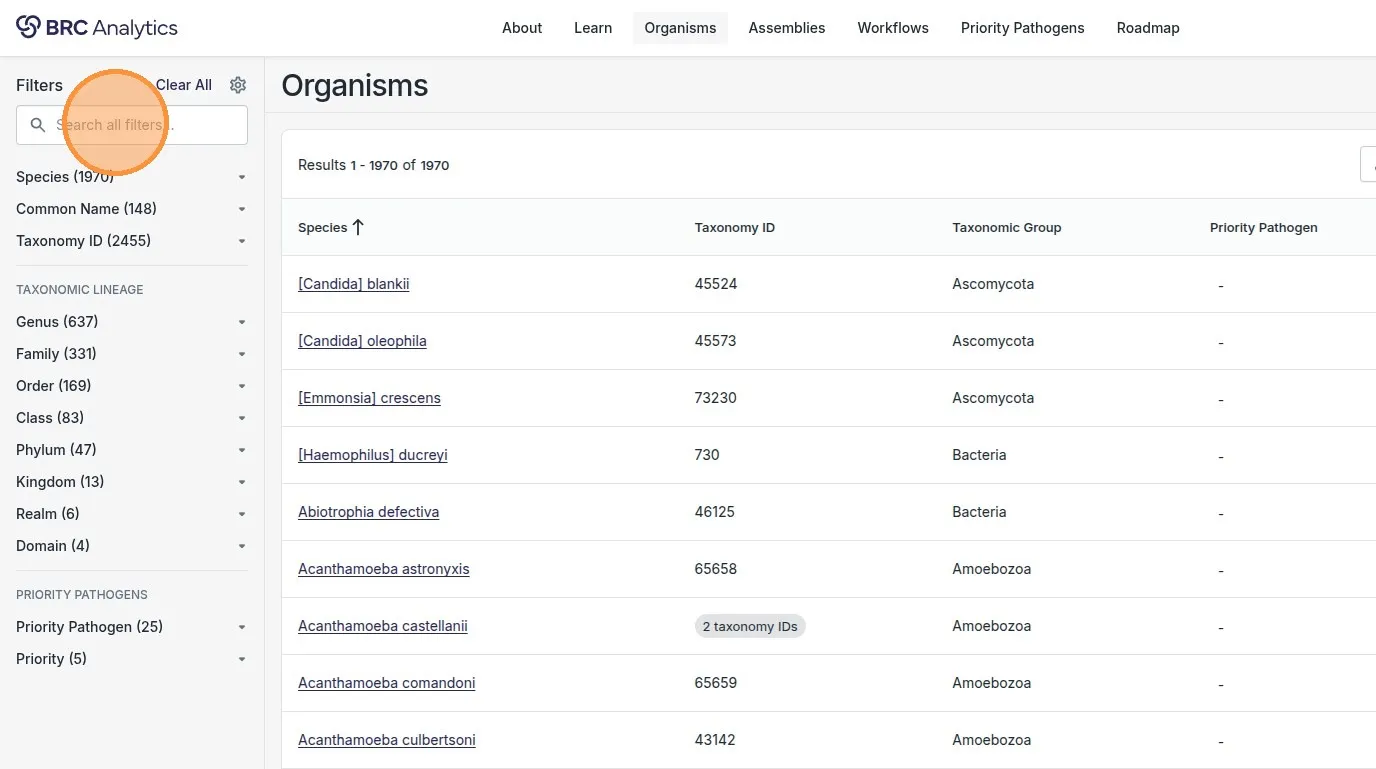
Filtering by species
Type a species name into the filter box to narrow the list. Here we search for Plasmodium.
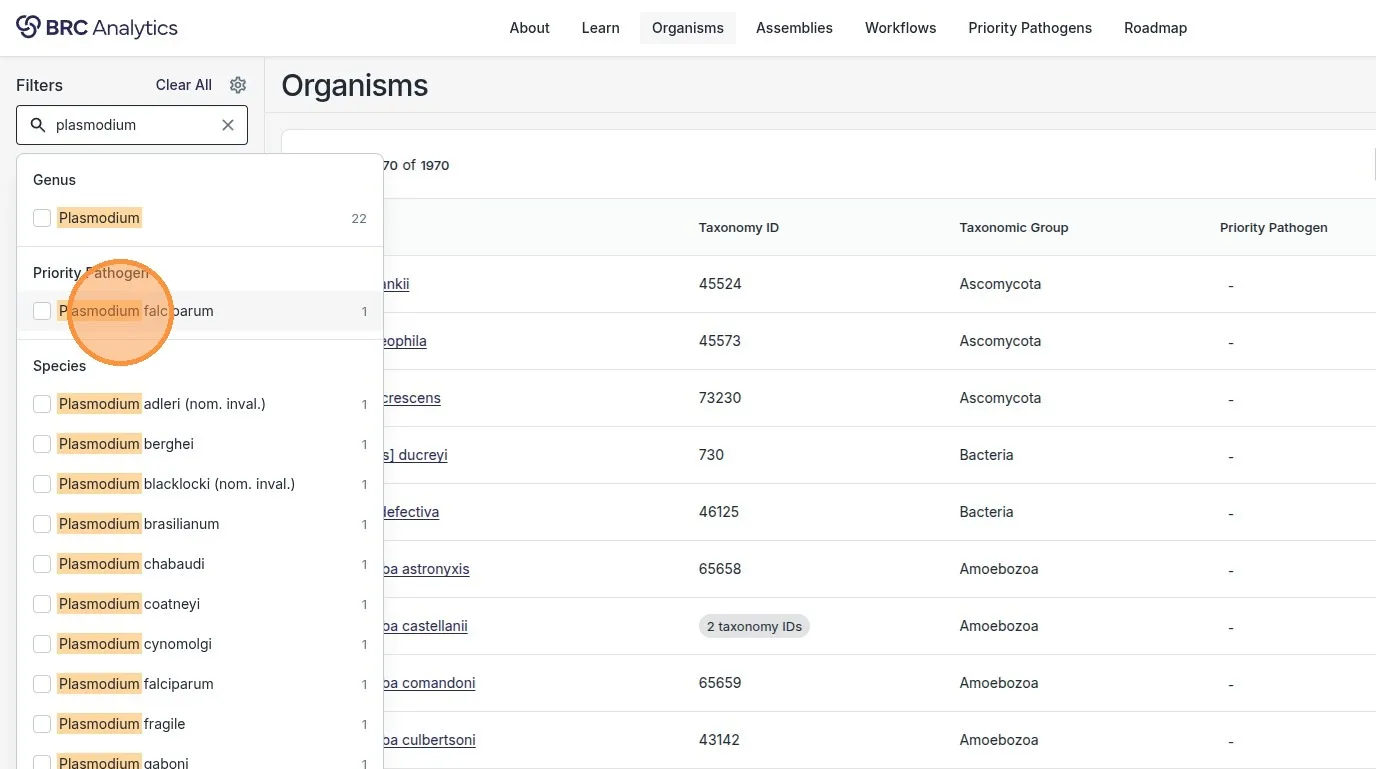
Selecting a species
The filtered list now shows matching species. Select Plasmodium falciparum.
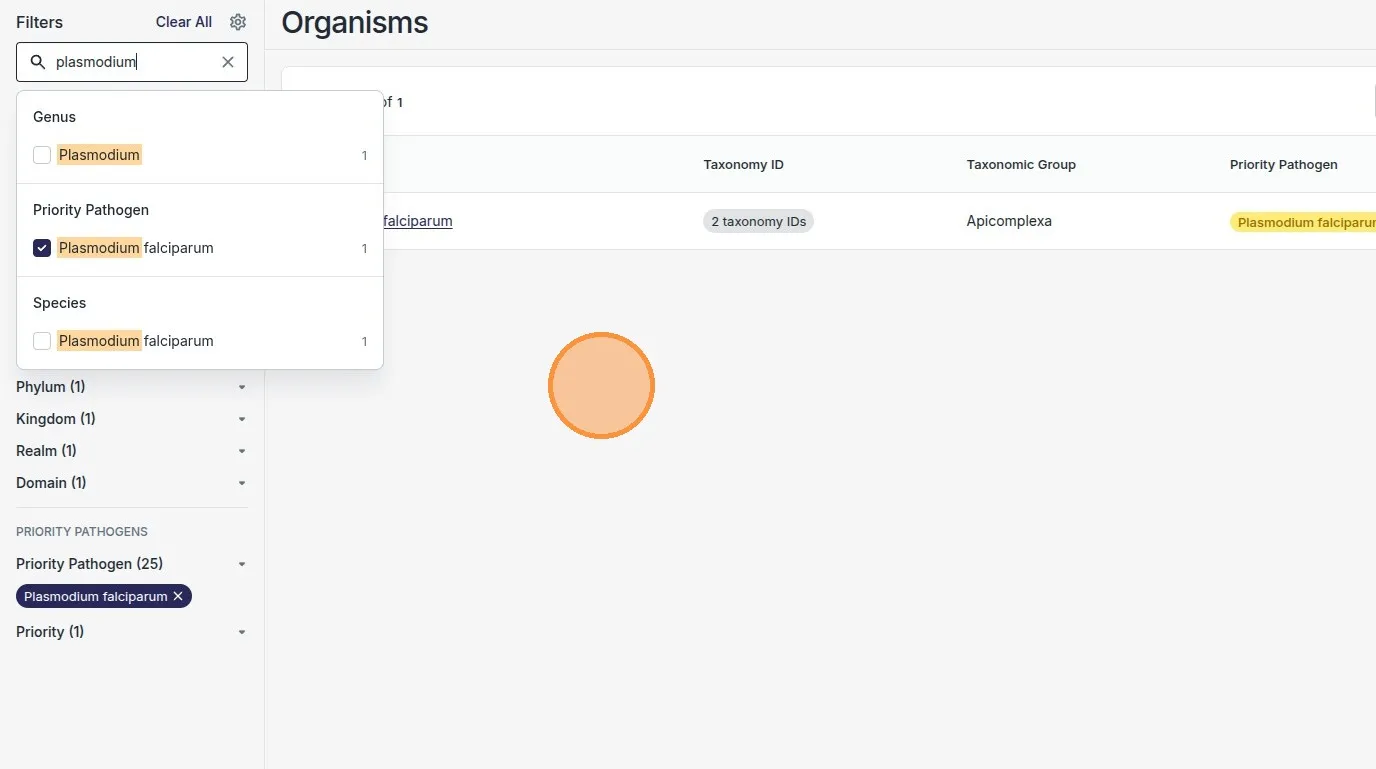
Opening the species page
Click on the species name to view its details.
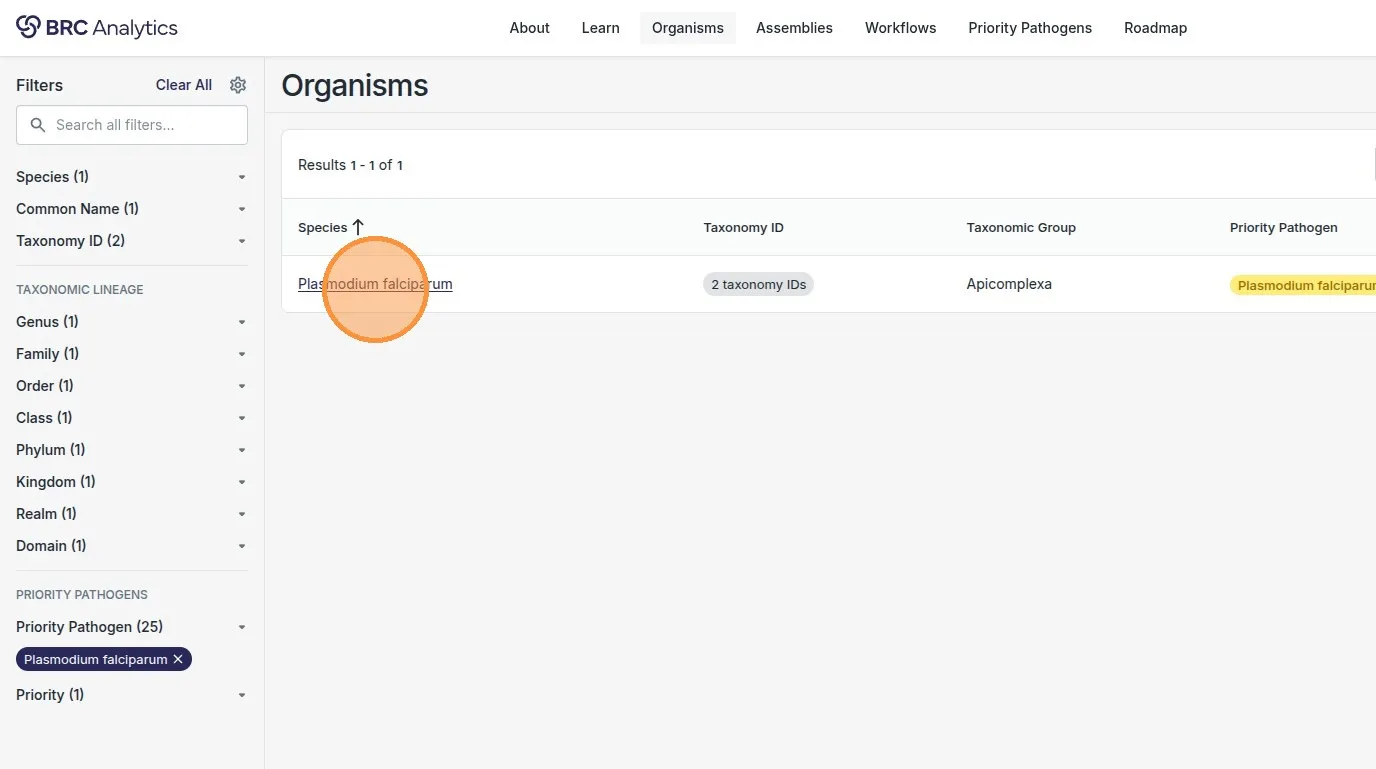
Viewing available assemblies
The species page lists all assemblies. In this case, Plasmodium falciparum has 27 assemblies.
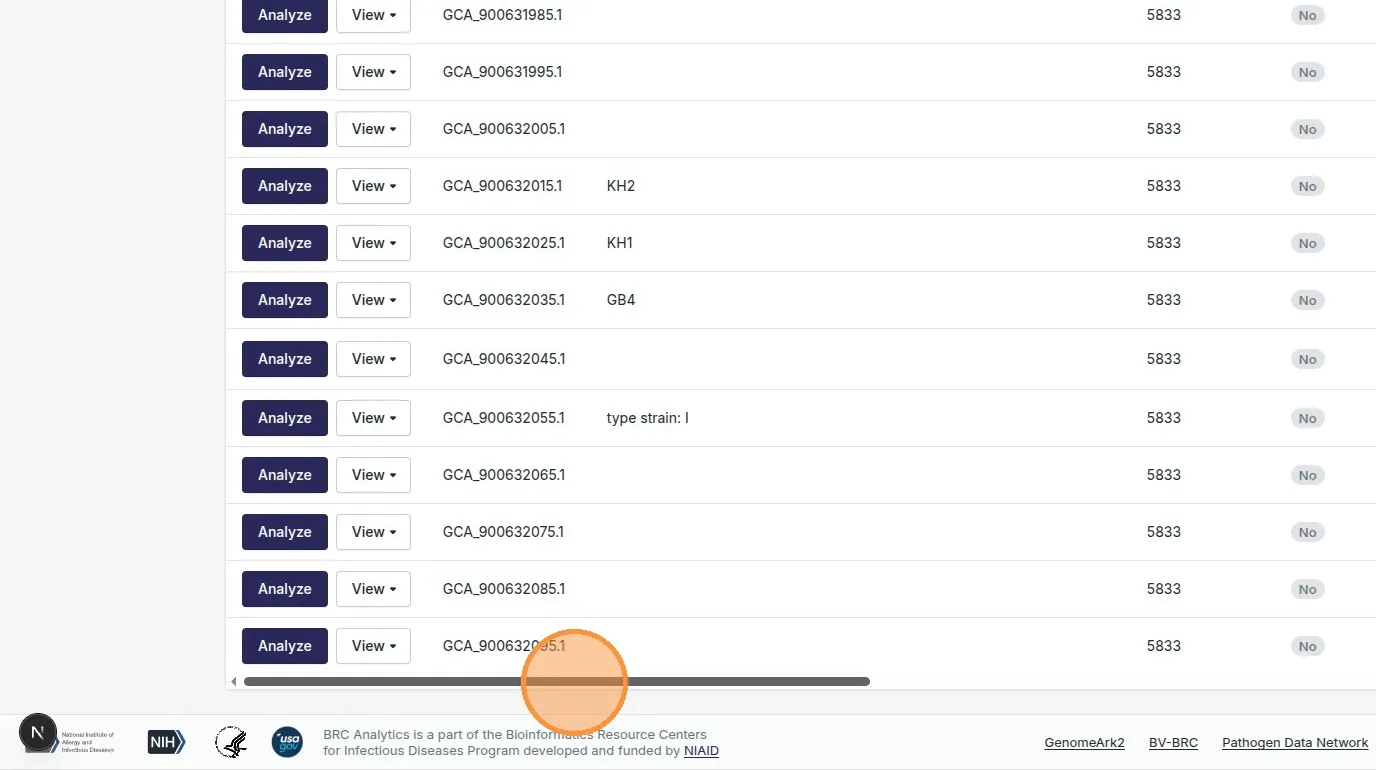
Assessing assembly quality
Each assembly includes quality metrics such as the number of scaffolds (lower is better) and scaffold N50 (higher is better). These help you choose the best assembly for your analysis. See glossary below for details.
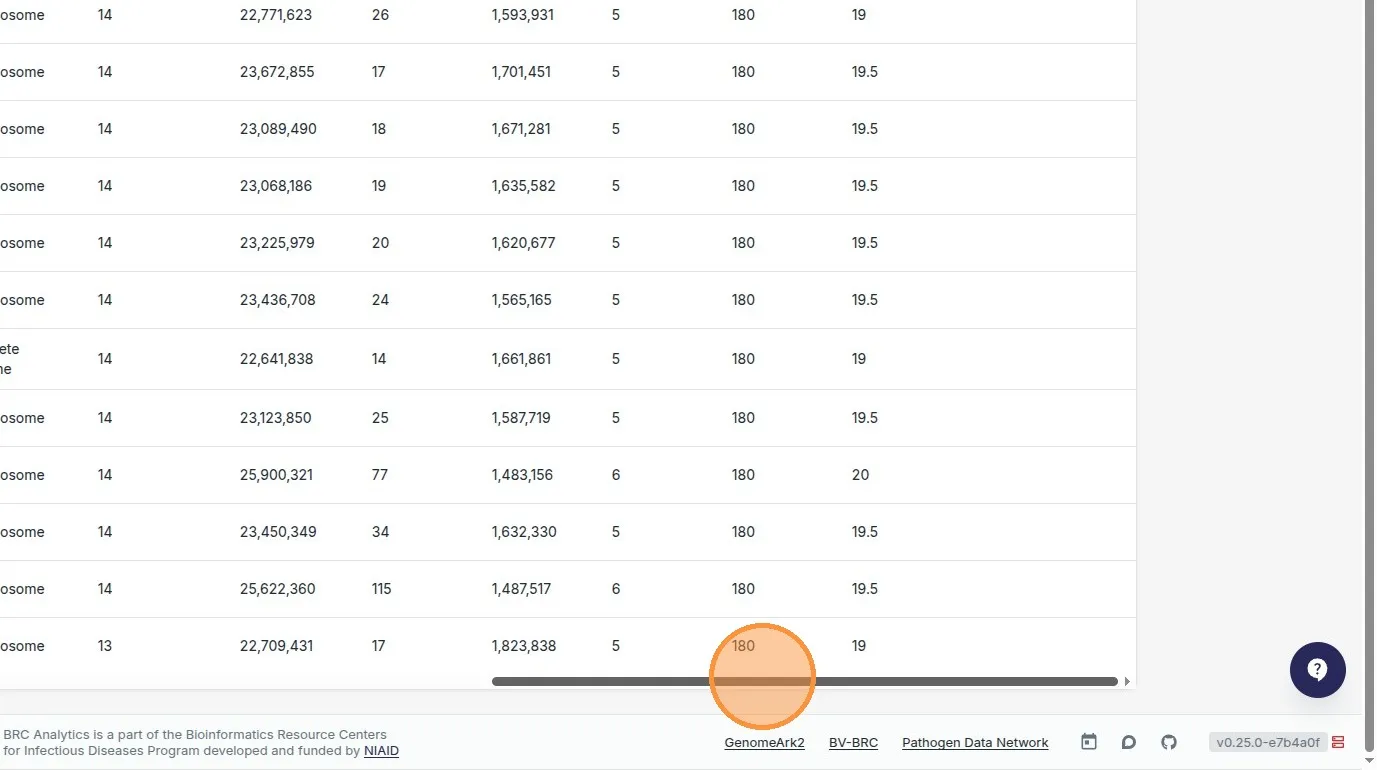
Reference assemblies
One assembly is typically designated as the "Reference" by NCBI. This is usually the most complete and well-annotated assembly for the species.
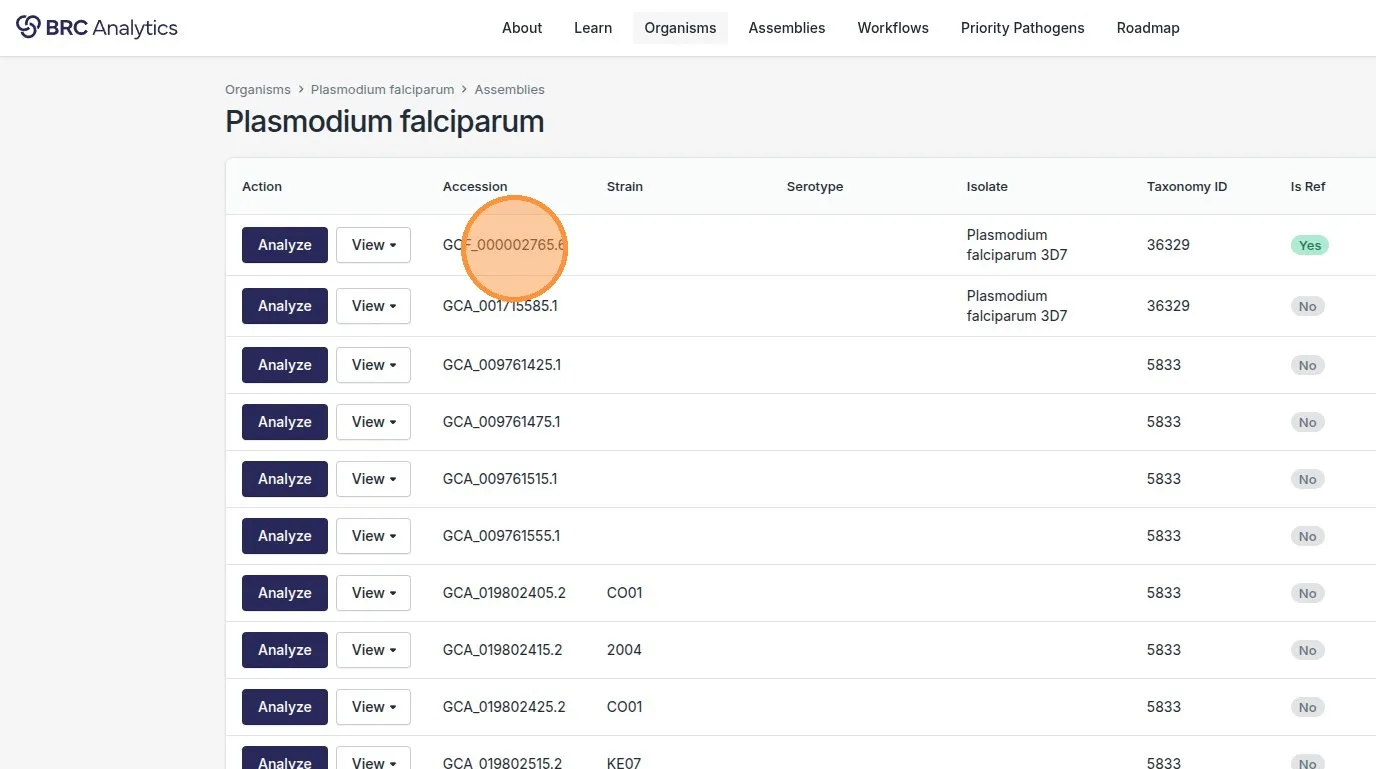
Analyze and View buttons
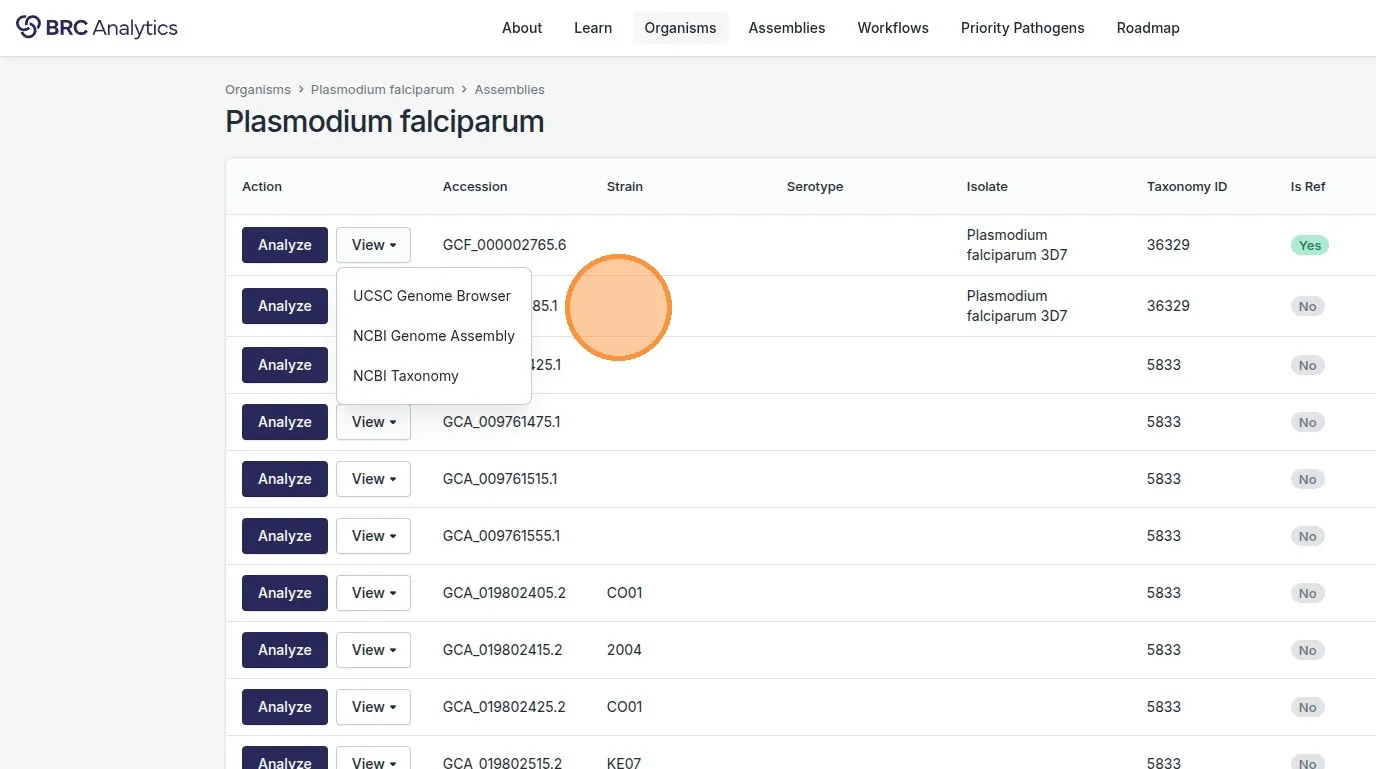
Each assembly has two action buttons: "Analyze" lets you run workflows against the assembly, and "View" shows external resources.
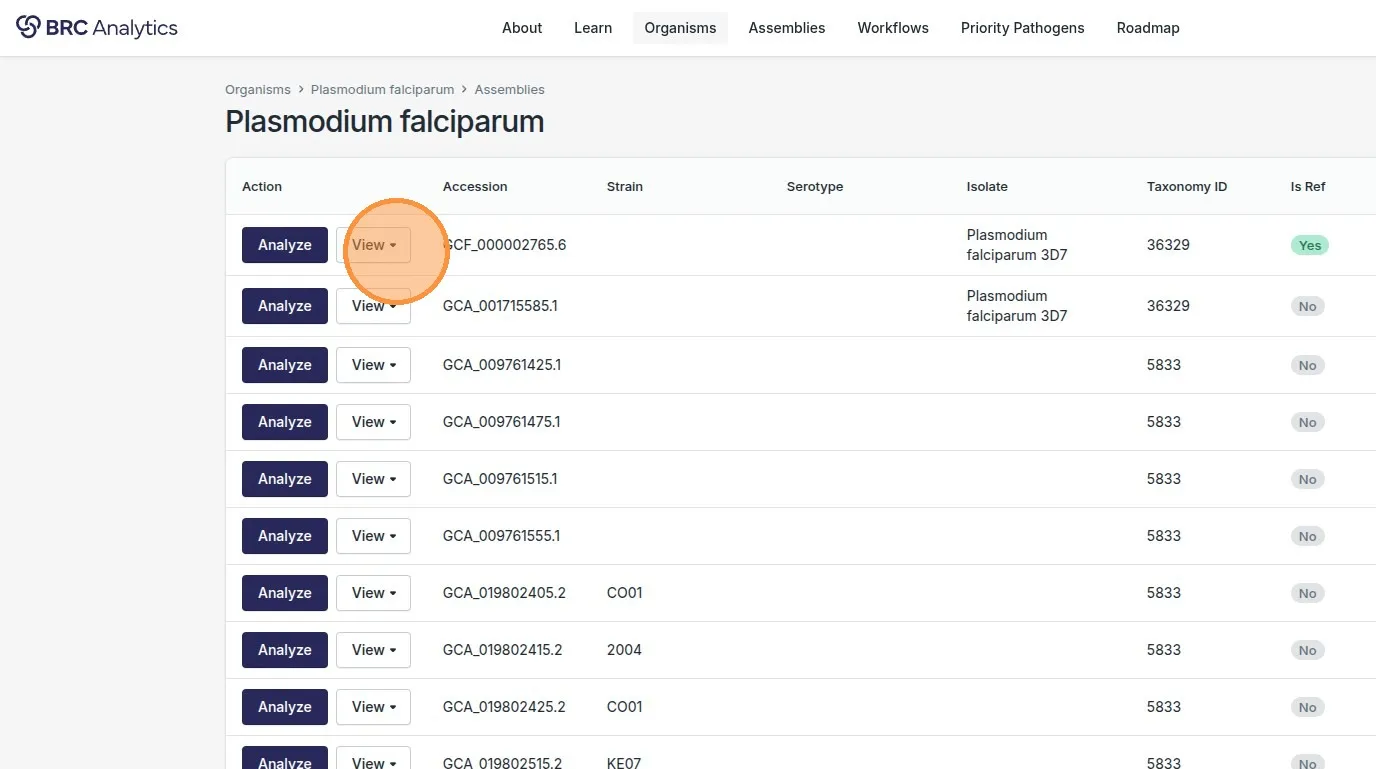
Viewing external resources
Clicking "View" opens links to external databases and resources with additional information about the assembly.
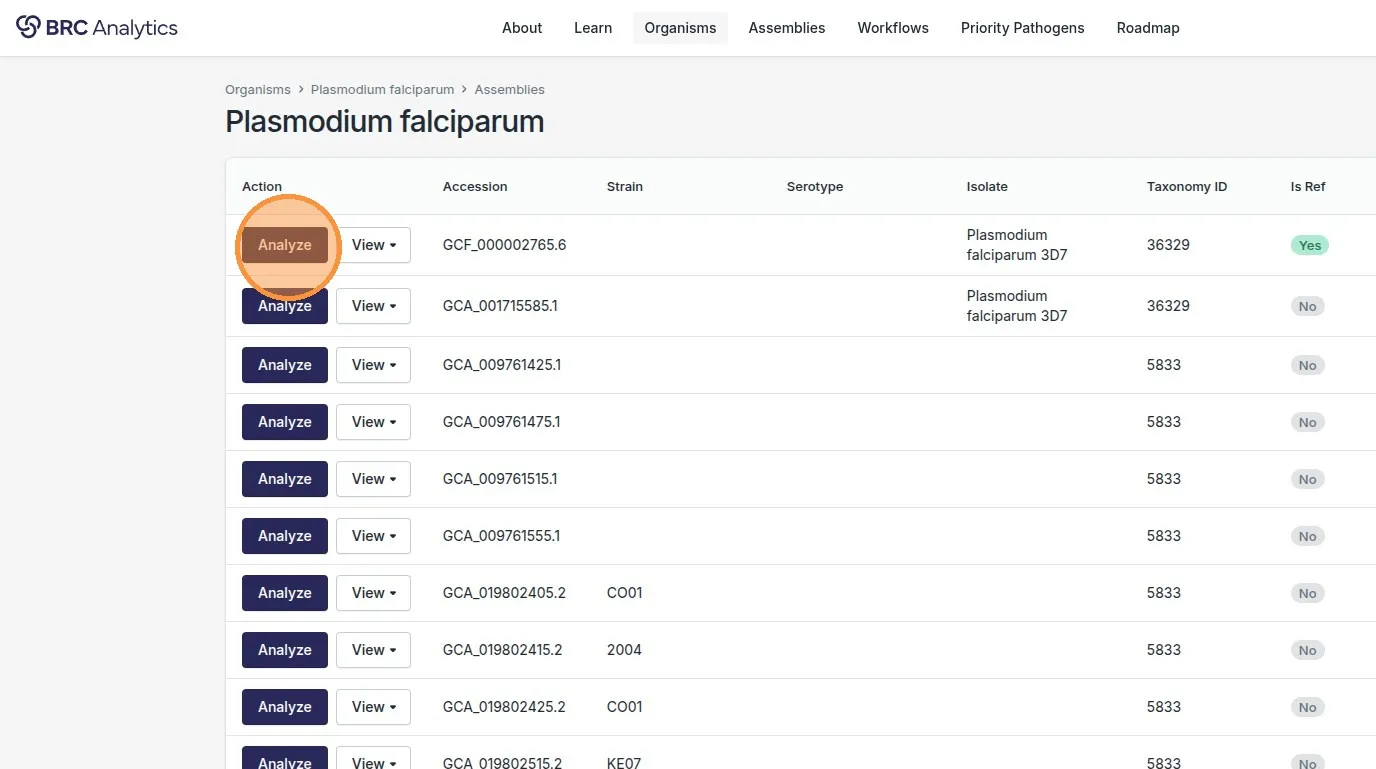
Starting an analysis
Clicking "Analyze" opens a page where you can run analyses in the context of the selected assembly.
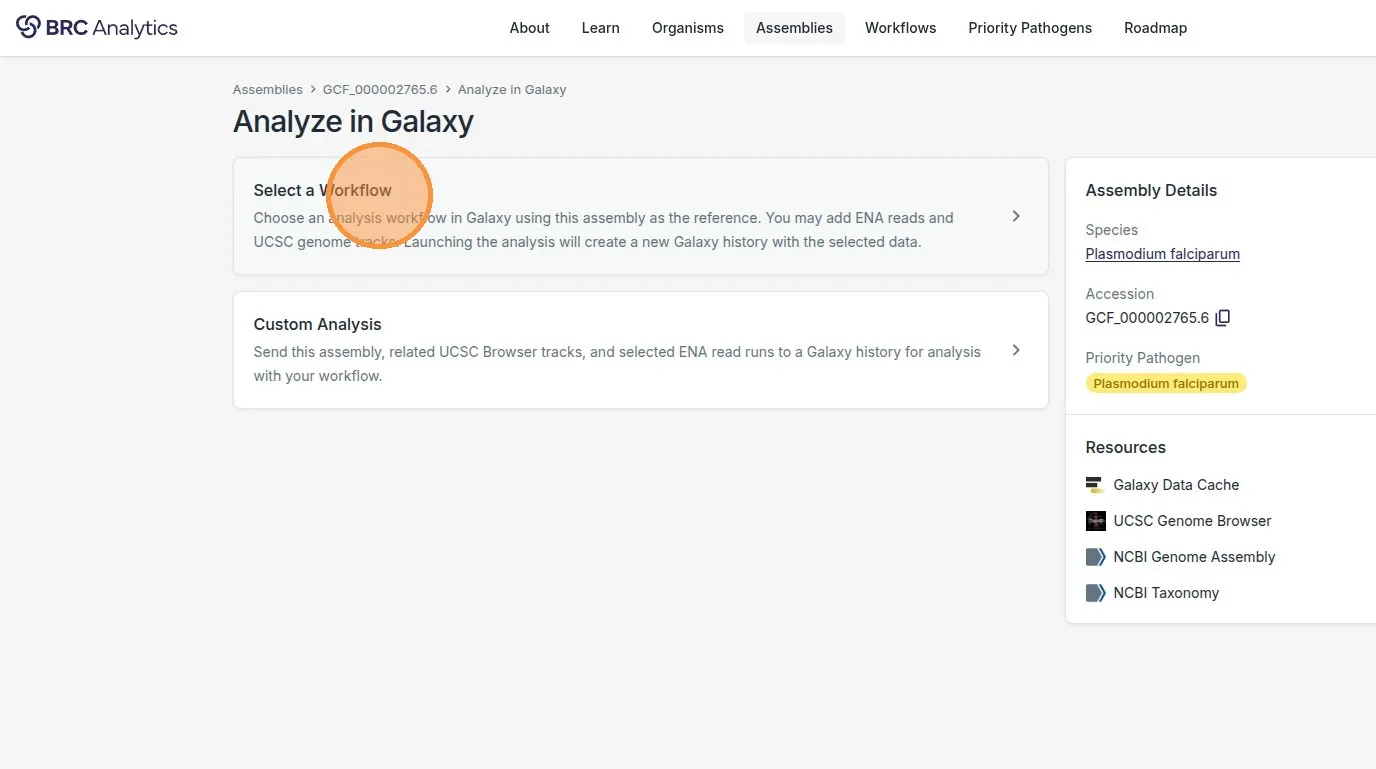
Selecting a workflow
Click "Select a workflow" to browse curated workflows. These are organized into categories specific to the species.
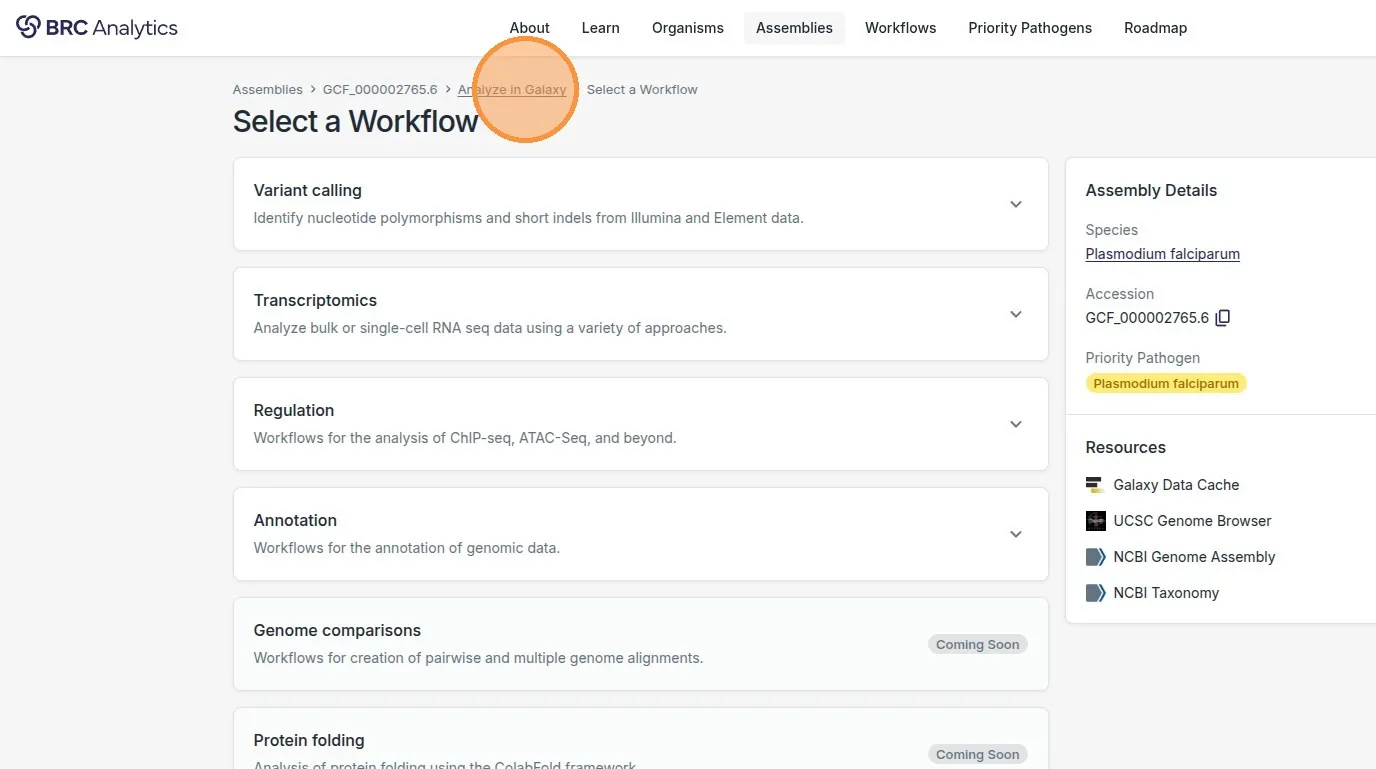
Workflow categories
The workflow page shows all available categories for the selected species, such as variant calling, RNA-seq, and more.
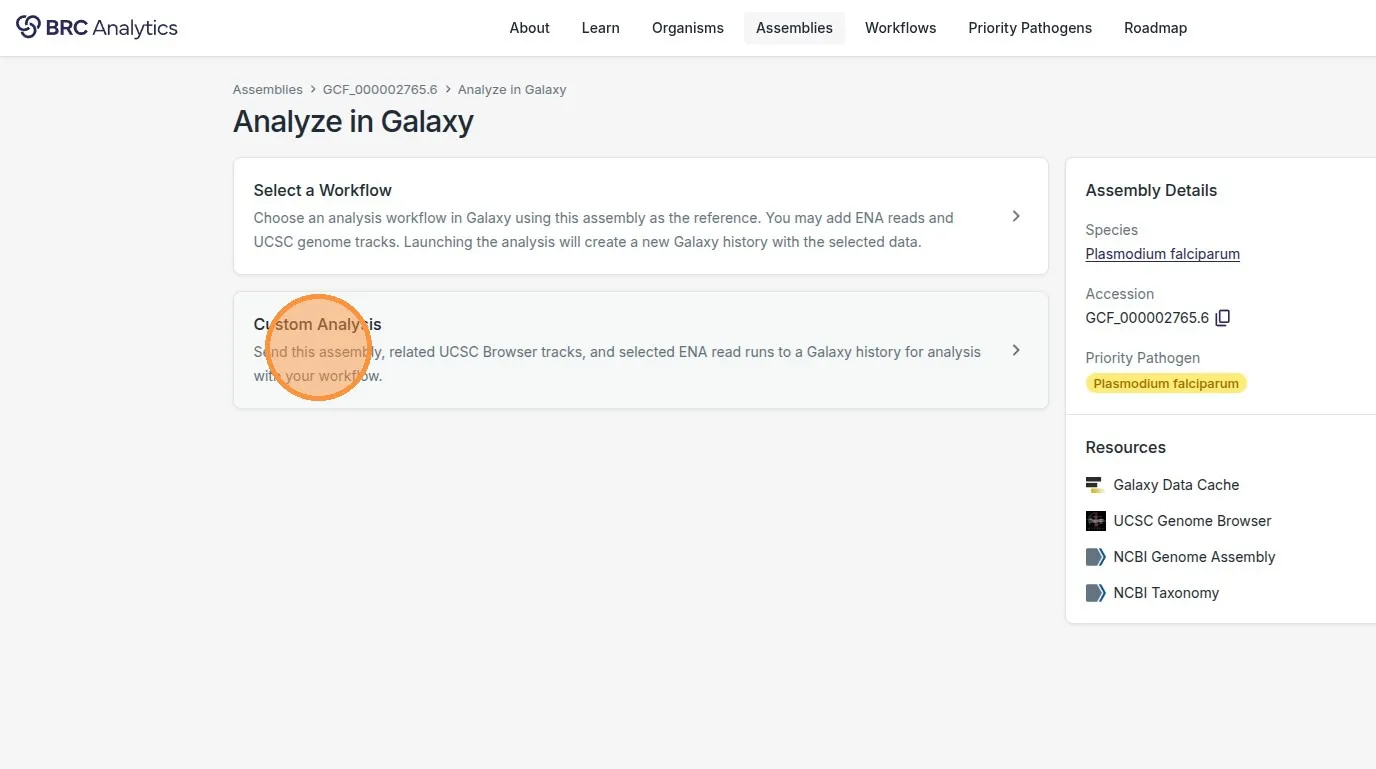
Custom analysis
You can also choose custom analysis to upload your own data and run ad hoc analyses using Galaxy.
Glossary
Scaffolds
A scaffold is a portion of a genome assembly consisting of contiguous sequences (contigs) joined together with gaps of estimated size. The number of scaffolds indicates how fragmented an assembly is — fewer scaffolds means the genome has been assembled into larger, more continuous pieces. An ideal assembly would have one scaffold per chromosome.
N50
N50 is a standard metric for evaluating assembly contiguity. It is defined as the length of the shortest scaffold such that scaffolds of that length or longer cover at least 50% of the total assembly. A higher N50 means the assembly contains longer contiguous sequences, indicating better overall quality. For example, an N50 of 10 Mb means that half of the assembled genome is in scaffolds of 10 Mb or longer.